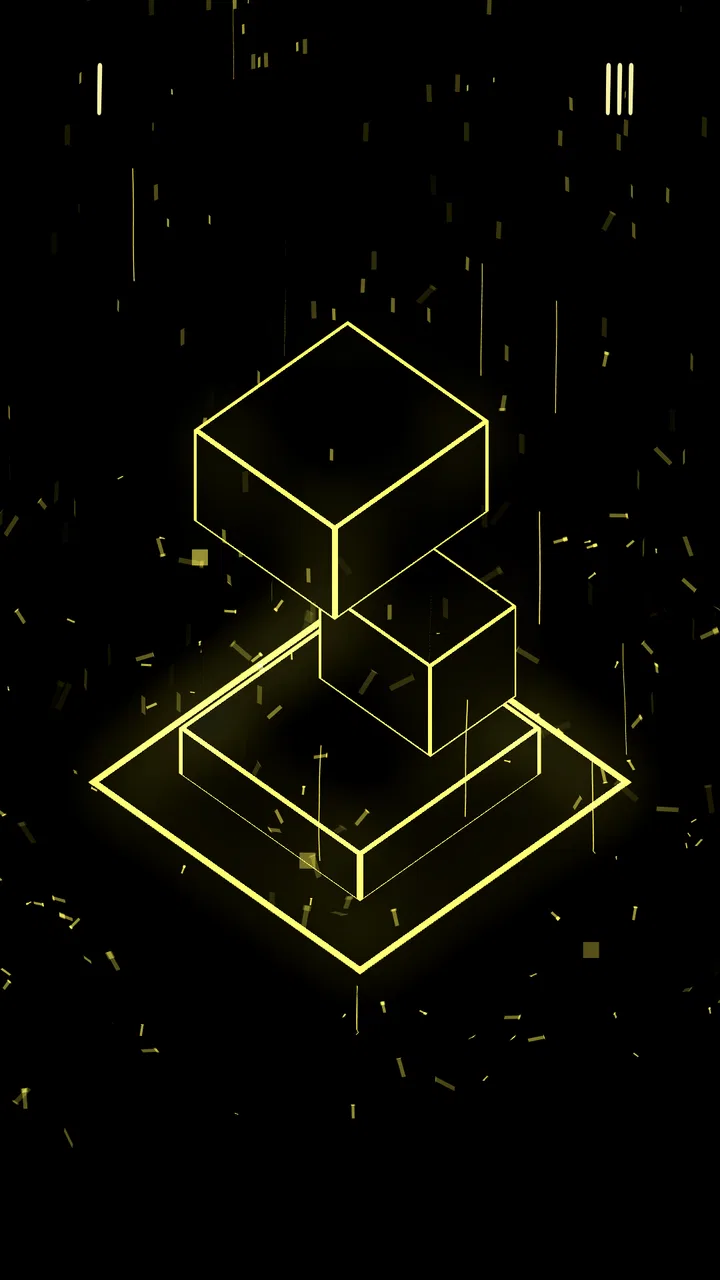
Upping Floors – Stack Blocks
- 4.1
- Rating
- 10.00K
- Installs
- $0.05
- Price

 Analysis by App-foxy
I went into Upping Floors expecting a tiny arcade distraction, and that is exactly where it makes the most sense. The idea is immediately readable: place blocks, build upward, and try to beat your previous height. There is no long introduction to work through before the first attempt. The appeal comes from the quick exchange between action and consequence: I make a move, the stack responds, and I instantly know whether I am still building carefully or beginning to lose control.
That simplicity is both the game’s strongest quality and its main limitation. This is not an arcade experience built around a large world, a story, or a long list of systems. It is a compact stacking game from Quantic Bit, aimed at people who enjoy testing timing and concentration in short bursts. I found it easiest to appreciate when I treated it as a small challenge for spare moments rather than as a game I would play continuously for a whole evening.
Why the first block matters more than it seems
The first action feels almost too easy, which is useful because it lets me understand the basic rhythm without explanation. I place a block and watch the tower begin to take shape. The next placement asks for slightly more attention, and the game’s entire character grows from that repeated decision. I am not navigating a maze or collecting a complicated set of resources; I am trying to keep a fragile arrangement stable while pushing it higher.
You May Also Like

 Pandora - Music & Podcasts
Pandora’s Music Is Easy to Start, but Harder to Recover
Pandora’s strength is its low-effort path from a seed to a station. Its weak spot is how much confidence it asks you to place in connection, setup, and quiet recovery.

 AccuWeather: Weather Radar
AccuWeather Review: A Quick, Clear Forecast for Everyday Decisions
For everyday plans, the best forecast is the one you can understand quickly. AccuWeather makes rain timing, radar, and local conditions easy to act on, with a few trade-offs.

 Hill Climb Racing
Why Hill Climb Racing Still Turns Crashes Into One More Run
A tiny car, a bumpy hill and one more upgrade: Hill Climb Racing keeps resurfacing because its simple chaos makes every near-miss feel personal.

 AliExpress - Shopping App
AliExpress Makes Global Shopping Feel Personal, but Shoppers Bear the Risk
AliExpress turns a global marketplace into a pocket-sized discovery engine. Its reach is useful, its shopping loop compelling, and its trade-offs easy to miss.

 Lords Mobile: Kingdom Wars
Lords Mobile Is a Kingdom-Building Routine, Not a Quick Match
A case-by-case verdict on the building, battles, device demands, and social commitments that make Lords Mobile rewarding for some players and exhausting for others.

 PDF Scanner app - TapScanner
TapScanner Makes Paperwork Easier to Capture, Check, and Share
TapScanner makes scanning with a phone feel less like a rescue operation and more like a dependable step in getting work done. Its capture tools are useful, though not flawless.
More From Our News Desk
View All News


That makes the opening seconds approachable for nearly anyone. The age rating is Everyone, and I can see why: the premise is harmless, the objective is clear, and the game does not require knowledge of a fictional universe or a difficult control scheme. A child can understand the goal quickly, while an adult can still find the timing challenge satisfying when the stack starts demanding precision.
My advice is not to rush the first few placements simply because they feel safe. Early moves establish the shape that later moves must work with. If I focus only on gaining height, I can create an awkward foundation that makes future placements much less forgiving. A better approach is to use the beginning of a run to settle into the movement rhythm and preserve a sensible stack, even if that means accepting a slower climb.
This is one of the game’s less obvious lessons: height is not the only measure of a good run. A slightly lower tower with a clean, manageable structure can be more valuable than a taller one that leaves no room for correction. That trade-off gives the basic action more thought than the short store summary suggests.
The feedback rhythm keeps each move meaningful
What kept me trying again was the speed of the feedback. Every placement tells me something. A clean result encourages me to repeat the timing. A poor result warns me that my current approach is becoming unreliable. Because the response arrives immediately, I rarely feel as if a mistake happened for an unclear reason. The game’s loop is easy to read: act, inspect the new stack, adjust, and act again.
That rhythm works particularly well on a phone. I can play while waiting for a coffee, during a short break, or when I want something more interactive than scrolling but do not have the attention for a larger game. A typical session can begin with the intention of making only a few placements. Then one promising run makes me want to continue, not because the game overwhelms me with content, but because I can see a realistic opportunity to improve the result in front of me.
The feedback also encourages a useful habit: watch the stack rather than thinking only about the next block. I found better results when I paid attention to the overall balance and used each placement as a chance to reassess. Looking only at the moving piece makes the game feel reactive. Looking at the tower turns it into a small planning exercise.
There is a psychological difference between these approaches. In the first, I am simply trying not to fail. In the second, I am choosing when to be conservative and when to take a more ambitious placement. That is where the arcade category suits the game: the rules remain simple, but the player’s discipline determines how long the attempt lasts.
One practical tip is to avoid treating every successful placement as proof that the same timing will work again. As the tower grows, the situation changes. A technique that feels comfortable near the beginning may become too aggressive later. I had better runs when I allowed my pace to change with the stack instead of forcing one repeated motion from start to finish.
The reward is personal improvement, not a crowded progression system
The main reward is the height I manage to reach and the satisfaction of making a cleaner attempt than the previous one. That is a modest reward, but it fits the design. Upping Floors does not need a large progression framework to make a short run matter. The motivation comes from the gap between an ordinary attempt and the run where everything lines up for a little longer.
I like that this makes the game easy to return to without asking me to remember a complicated objective. When I reopen it, I know what I am trying to do: build higher, improve my control, and avoid repeating the mistake that ended the last attempt. The goal remains understandable even after a long break.
For players who enjoy chasing personal records, that can be enough. The game gives each attempt a clear standard for comparison, and the small scale makes improvement feel attainable. I do not need to master a huge campaign before seeing progress. A better run can come from one adjustment: slowing down, paying more attention to alignment, or refusing to make a risky placement just because the tower is already doing well.
There is also a useful distinction between rewarding skill and rewarding persistence. Replaying alone will not make every attempt better if I ignore what went wrong. The game is most satisfying when I treat a failed run as information. Did I become impatient? Did I focus too narrowly on the next block? Did I let a good score pressure me into a careless decision? Those questions give the restart a purpose.
On the other hand, anyone looking for unlockable characters, missions, story scenes, or a deep collection system should choose a different kind of arcade game. The appeal here is concentrated in the stacking challenge itself. That focus feels clean to me, but it also means the reward may seem thin if personal bests are not enough to hold your attention.
How a run resets and why that makes another attempt tempting
The reset is central to the experience. When a run ends, the disappointment is brief because the route back to another attempt is obvious. I do not have to reconstruct a complicated plan or replay a lengthy opening. The next session exists for one reason: to apply what I just learned while the mistake is still fresh.
This creates a useful “one more try” effect. A failed attempt is not merely a dead end; it becomes a reference point. I may remember that I rushed near the top, accepted a poor position, or stopped paying attention to the tower’s shape. The restart gives me an immediate chance to test a correction. That is a stronger reason to replay than a generic promise of more content because the next run directly responds to the last one.
I would still set a limit if I noticed myself repeating the same error without changing anything. Short arcade games can make repetition feel productive even when it is not. My best routine is to pause for a moment after a failure, identify one specific adjustment, and then begin again. Changing too many things at once makes it hard to know what helped.
This is also where the game works as a break-time activity. A quick session can fit into a narrow window, while a longer session can develop naturally if I am close to improving my result. It does not demand that I commit to a fixed schedule. That flexibility makes it easier to recommend to someone who wants a small game for occasional use rather than a daily obligation.
The trade-off is that the reset loop may feel repetitive sooner for players who need constant novelty. The game’s structure asks me to find interest in refinement. If I want new environments, changing objectives, or a steady stream of surprises, the repeated stack-and-restart pattern may not be enough. In that case, a broader arcade title with multiple modes would be a better fit.
Where it fits among stacking and arcade alternatives
Compared with larger arcade games, this one is easier to understand and quicker to enter. There is less mental overhead between opening the app and making the first move. That is a genuine advantage when I want a focused challenge instead of a menu full of modes, upgrades, and tasks.
Compared with puzzle games, the experience feels more immediate and less deliberate. I am not usually solving a board several moves ahead. I am responding to the current placement while keeping the future shape in mind. Players who enjoy action with a light planning layer may prefer this balance, while those who want deep logic puzzles may find the decision-making too narrow.
Compared with endless games built around constant speed, the stacking concept gives me more reason to observe. The challenge is not simply to react as quickly as possible. I have to manage risk, protect the foundation, and recognize when a safe choice is better than a flashy one. That makes it a reasonable alternative for someone who likes arcade pressure but does not want frantic complexity.
The low purchase price also affects how I judge it. At $0.05, it is positioned as a very small paid game rather than a major entertainment purchase. I would not expect the breadth of a premium arcade package at that level, and I think it is fair to evaluate it by whether the central loop is enjoyable. If you like stacking challenges, the cost is easy to understand; if the basic action does not appeal to you, no amount of replay advice will change that.
Quantic Bit keeps the presentation centered on the core activity, at least in the way the game defines itself. That focus is welcome for a player who wants a straightforward challenge, but it leaves little room for someone seeking a feature-heavy experience. The right comparison is therefore not with a large, content-rich game, but with other small arcade diversions that compete for a few minutes of attention.
Who will get the most from it
I would recommend it first to players who enjoy personal records and gradual improvement. If you like seeing whether a small change in timing produces a better result, the loop has enough tension to remain engaging. It is also a good choice for people who prefer games that explain themselves through play rather than through tutorials or long instructions.
It suits short, interrupted sessions particularly well. Imagine waiting for an appointment with only a few minutes available. You can make a run, notice where it failed, and put the phone away without losing the thread of a story or leaving a team in the middle of a match. Later, the same simple objective is still waiting, and the previous mistake can become the starting point for a better attempt.
It may also work for families because the Everyone rating and direct objective make it approachable. Still, I would not describe it as a cooperative family game or a shared activity; the motivation is mainly individual improvement. Each person would be testing their own control and patience rather than building something together.
I would ask competitive players to consider what kind of competition they need. If comparing my own attempts is satisfying, the game has a clear purpose. If I need online opponents, leagues, or a broad ranking structure to stay interested, this is probably not the right choice. Its challenge is intimate and self-contained.
I would also steer away anyone who dislikes repeating a compact action. The game does not disguise its loop, and that honesty is part of its charm. It is not trying to become a platform adventure or a strategy campaign. The question is whether placing blocks carefully remains enjoyable after the initial novelty fades.
Practical details before installing
Upping Floors is an arcade game developed by Quantic Bit. It has an average rating of 4.1 from around 211 ratings, with 18 written reviews, and has reached over 10K installs. Those figures suggest a small but established audience rather than a massive mainstream hit. I read that as a reason to approach it with realistic expectations: this is a focused little game, not a huge platform with years of accumulated content.
The current version is 1.0.9, and it runs on Android 6.0 or later. That minimum requirement makes it accessible on many older Android phones, although the experience will naturally depend on the device’s screen and responsiveness. For a timing-based game, I would close unnecessary background apps if the phone feels sluggish, because even a small delay can make a precise placement feel unfair.
The game costs $0.05, carries an Everyone content rating, and was released on January 1, 2021. The release date matters less than the play style: it remains the kind of compact arcade title that can be picked up without preparation. I would check that the device meets the operating-system requirement before downloading, especially if I am using an older phone.
One thing I would not do is buy it expecting a tutorial-heavy onboarding sequence or a broad set of unrelated activities. The value is concentrated in the block-stacking loop. That makes the decision simple: if the idea of building a taller and more stable tower sounds appealing, the tiny price makes experimentation easy; if you already know that repetition frustrates you, the low cost does not make the mismatch disappear.
My verdict on the complete loop
The full cycle is clear and effective: I place a block, receive immediate feedback, enjoy the reward of a higher or cleaner stack, lose the run when my control breaks down, and restart with a specific lesson in mind. That connection between action and reset is what gives the game its staying power. It does not need a complicated reward structure because the next attempt is already meaningful.
My favorite part is the way a tiny objective can create genuine concentration. The tower turns each casual move into a decision about patience, balance, and risk. My biggest reservation is equally simple: once I have exhausted my interest in improving my own results, there is not much else here to pull me forward. The focused design is a strength for the right player and a limitation for everyone else.
Upping Floors is best when you want a small, honest arcade challenge that starts quickly and rewards careful repetition. I would recommend it to someone who enjoys stacking games, short sessions, and the satisfaction of correcting one mistake at a time. I would skip it in favor of a richer arcade or puzzle alternative if I needed variety, multiplayer competition, or a long progression path. For its narrow purpose, though, the loop is easy to understand, pleasantly immediate, and just demanding enough to make another attempt feel worthwhile.
FAQs for Upping Floors – Stack Blocks
01What is Upping Floors – Stack Blocks?
Upping Floors – Stack Blocks is a casual arcade puzzle game centered on stacking blocks to build increasingly tall floors. The main challenge is timing: you must place each moving block as accurately as possible on top of the previous one. Successful placements help you climb higher, while poorly aligned blocks can make the structure narrower and end the run sooner.
02How do you play Upping Floors – Stack Blocks?
The gameplay is easy to understand but becomes more demanding as your tower grows. Blocks move across the screen, and you tap at the right moment to drop them onto the existing structure. The goal is to keep the building balanced and stack as many floors as possible. Careful timing is more important than speed, especially during longer attempts.
03Is Upping Floors – Stack Blocks free to download and play?
Upping Floors – Stack Blocks is generally presented as a free-to-download mobile game, allowing players to try the core stacking experience without paying upfront. However, availability of advertisements, optional purchases, or other monetization features may depend on the version and platform. It is a good idea to check the Google Play Store or App Store listing before downloading.
04Does Upping Floors – Stack Blocks require an internet connection?
The basic stacking gameplay appears suited to short, casual sessions and may be playable without a constant internet connection. That makes it convenient for commuting, waiting rooms, or quick breaks. Nevertheless, online access may still be needed for advertisements, analytics, updates, leaderboards, or in-app purchase verification, so offline features can vary by device and app version.
05Is Upping Floors – Stack Blocks suitable for children and casual players?
Yes, the simple controls and straightforward objective make Upping Floors – Stack Blocks accessible to children, beginners, and players who prefer relaxing arcade games. There are no complicated rules to learn, although improving your score requires patience and precise timing. Parents should still review the store rating, advertising details, and any optional purchases before allowing younger players to use the app.
Pros
- Simple one-touch controls make it easy to start playing immediately.
- Short rounds fit well into quick breaks or casual gaming sessions.
- Stacking mechanics offer a satisfying sense of timing and precision.
- Minimalist presentation keeps the gameplay focused and uncluttered.
- Progressively challenging levels can help improve concentration and reflexes.
Cons
- Gameplay may feel repetitive once the stacking pattern becomes familiar.
- Mistimed taps can quickly end a round
- which may frustrate some players.
- Limited variety may reduce long-term appeal for experienced gamers.
- Ads may interrupt play or appear frequently in the free version.
- Precise timing can be difficult on smaller phone screens.

Upping Floors – Stack Blocks
Gallery